My group met and shared our ideas for improving parks. There was a lot of interesting variation, but we all seemed to include smart devices that could be leveraged to improve visitors’ enjoyment of parks and to aid park cleanliness and the environment.
Our next step is that we’re each focusing on one of our ideas for the design crit. I am looking further into how playgrounds could be used to generate electricity and teach children about sustainability.
This CNN article that I referenced in a previous post features a free outdoor gym in Hull, northeast England that generates electricity from its users’ workouts.
The cost of this novel park was a whopping £76000, but a substantially cheaper version is in the works. It is estimated that the plans for a new park would cost approximately £24000.
While this is a substantial sum of money, it is less shocking when you realize how much a normal playground can cost.
Action Play & Leisure‘s playgrounds range from £3000 for a very small playground (pictured below) to £50000.

While Playground Design and Constructions states that a very small playground would start at £30000.
An added expense of some electricity-generating technology discussed in the CNN article would be connecting electricity-generating parks like these to the power grid. However, gyms and playgrounds like these can be used to power local lights and devices for less.
Playground equipment is already being used this way in some places today. A nonprofit organization called Empower Playgrounds provides electricity-generating merry-go-rounds to schools in Ghana.
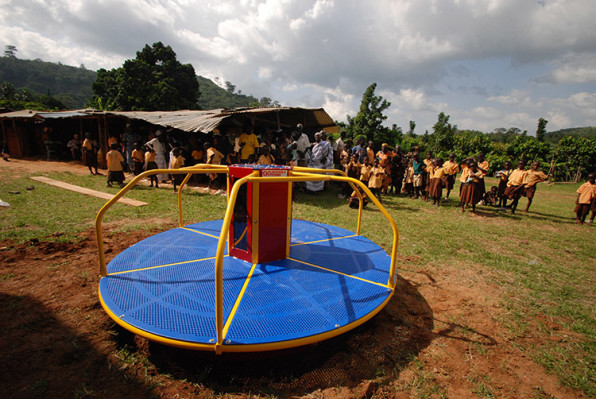
These merry-go-rounds are use to charge LED lanterns that students can take home at night. While their equipment costs £7600 to install, Empower Playground estimates that each merry-go-round can supply 200 children a year with electricity for at least 5 years – about £7.60 per student.
Another organization called Playground Energy is experimenting with the use of generators embedded in playground equipment. In the video below, they use the electricity generated to flash lights meant to encourage children to play more. Their mission is to promote health by getting kids exercising.
A non-financial benefit discussed in the CNN gym article is that outdoor electricity-generating gyms for adults raise awareness of sustainability. I think that this is an area for growth in electricity-generating playgrounds.
Rather than a new, state-of-the-art playground, one or two pieces of equipment or less-expensive adaptations to existing equipment could be effective educational tools. In my sketch below, the light meter above the equipment on the left shows the amount of energy needed before it will play a song – then this meter will reset. The larger meter on the right shows how much electricity has been generated that entire day compared to the high score for the week.

 Smart City Design Workbook