After meeting with my group and discussing our trips to the park, we came away with four ideas and pain points that we wanted to look into:
- How can parks be used at night?
- Can “social benches” encourage strangers to interact?
- Can compost bins generate energy to power stuff in the park?
- How to track park animals that visitors come to the park to see (white deer, pelicans…)
I am going to focus on composting, generating electricity, and digital signage that could aid animal-spotting and the issue of what time parks close. I am very interested in the idea of using the park at night, but I am still having trouble finding helpful resources and coming up with ideas.
Compost
My group discussed that dog-walking is common in parks and questioned what happened to the waste that the dogs left behind, noting that many parks were lacking in public trash bins.
This reminded me of free bag dispensers that I have seen in some parks and neighborhoods. The dispenser pictured below is full of biodegradable bags which could be composted along with their contents.


Another question my group asked was what happened to all of the leaves in the park after Autumn.
Whether they are currently raked and removed or left to crumble and decompose, leaves can be composted too. If it were combined with some fun games for kids or refreshments, a leaf-raking party might encourage the community to get together and help.
If you think this sounds suspiciously like Tom Sawyer having a blast painting that fence, you’re not entirely wrong. But remember how exciting it was when you were a kid to rake a giant pile and jump in it? I think there could be some potential here for local families to get together and have fun.
It’s a thing, look! -> (https://eastmorland.org/?p=468)

Public compost bins like these could be used for food, leaves, and dog waste. The compost could then be used to fertilize plants in the park or a community garden.

Generating Electricity
Outdoor gyms like this one could be used to generate electricity for park needs:

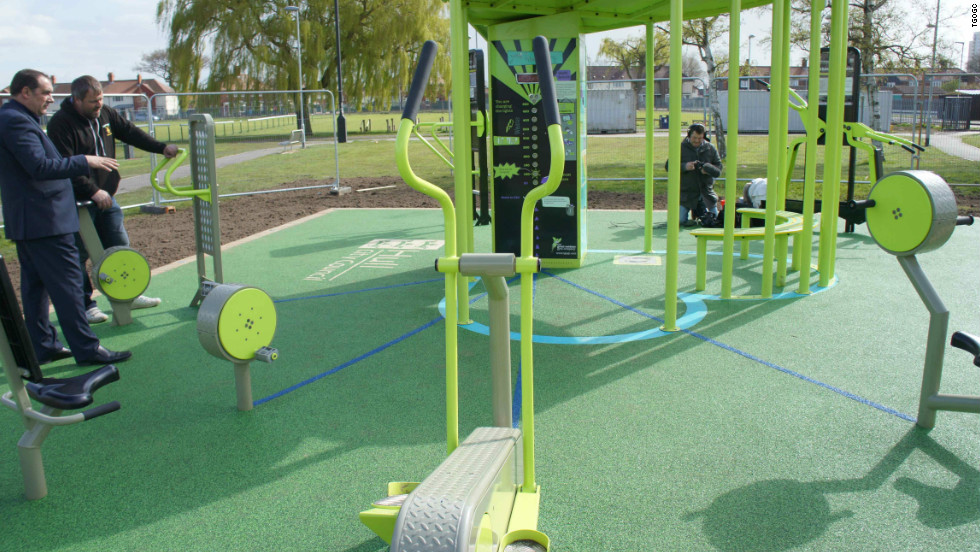
This article features an outdoor gym that’s already generating electricity:
https://edition.cnn.com/2012/11/27/world/europe/gym-workout-watts-electricity/index.html
But this doesn’t have to be limited to adult exercise. Playgrounds are a common park fixture. Swings or see-saws like those below could be adapted to generate electricity when used.

The electricity generated in the park could be used to power lights or digital signage:
Digital Signage
One of our group members mentioned a park where people often go hoping to see white deer. Unfortunately, however, it can be difficult to locate the deer in the park and they are disappointed.
An idea that we discussed was some way to track park animals so that visitors can see them. One obvious problem with this is that the animals need some reprieve from visitors. Perhaps the tracking would only work on part of the park or the animals would have a haven in a shelter, densely wooded area, or the water and islands (depending on the size of the park).
A screen like this in the park could be used to display the location of interesting park animals like pelicans (St. James’s park), deer, or black swans. Maybe it could even be powered by the gym equipment above.

Photo sources (map, pelican, swan)
One facet of my group’s concern about parks closing at night was that they often close at unpredictable times. Many parks close at “dusk”, but when exactly is that? Another digital sign could display:
“Park closes today at dusk 17:15”
Using the park at night
When my team was trying to figure out why parks closed at night, we thought that it might have to do with safety and trying to prevent people from sleeping inside the parks.
This made me wonder if there was a way to comfortably and safely allow people to sleep in the parks? With so many people sleeping on the streets (and probably in the parks already), could better lighting in some areas or more benches help? Is there a need or would there be any benefit from add some organization to who enters the park at night or when or where?
 Smart City Design Workbook

